
← Knowledge Base
Vacuum Casting: A Comprehensive Guide for Advanced Prototyping and Low-Volume Production
A comprehensive guide to vacuum casting for producing high-fidelity prototypes and low-volume production parts using reusable silicone molds and thermoset resins.
Published 2026-01-14
Key findings
1-50+unitsTypical low-volume production runs
±0.1mm per 100 mmAchievable tolerance
1-3daysSoft tooling lead time
40-60°CSilicone curing temperature
6-16hoursSilicone cure cycle
0.1-0.3%Silicone mold shrinkage
0.15-0.5%Polyurethane resin shrinkage
What's inside
- The Vacuum Casting Process: From Master Pattern to Final Part
- Master Pattern Fabrication & Preparation
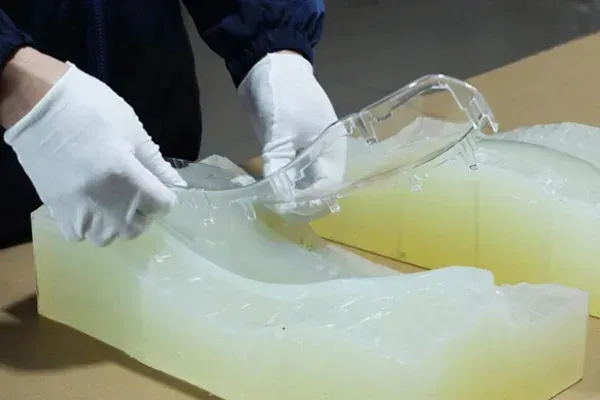
- High-Performance Silicone Mold Making
- Vacuum-Assisted Resin Casting & Curing
- Why Vacuum Casting is Preferred in Prototyping and Beyond
- Superior Fidelity and Functional Performance
- Accelerated Development via Rapid Soft Tooling
- Unmatched Material and Application Versatility
- Cost-Effectiveness for Low Volumes
- Conclusion
Who it's for
- Product designers validating form, fit, and function
- Engineers conducting functional and environmental testing
- Manufacturing teams planning low-volume or bridge production
- R&D teams developing aerospace, medical, and industrial components
- Stakeholders seeking cost-effective prototypes before mass production
About this resource
Vacuum casting is a rapid, cost-effective process used to create high-fidelity prototypes and industrial-grade parts in low volumes. By pouring thermoset polyurethane resins into reusable silicone molds made from a master pattern, manufacturers can produce near-injection-molding-quality copies for functional testing, design validation, marketing, and bridge production.
The Vacuum Casting Process
- Master Pattern Fabrication & Preparation: A master pattern is CNC machined or 3D printed, then sealed, primed, dimensionally compensated for shrinkage, and finished to perfection.
- High-Performance Silicone Mold Making: The master is encased in degassed, platinum-cure silicone and cured in a temperature-controlled oven before the mold is precisely segmented.
- Vacuum-Assisted Resin Casting & Curing: Two-component polyurethane resins are mixed, degassed, poured under vacuum, and post-cured to replicate fine details without voids.
Key Benefits
- Superior fidelity: Replicates textures to VDI 3400 standards with tolerances around ±0.1 mm per 100 mm.
- Fast soft tooling: Silicone molds can be ready in 1–3 days, enabling parallel design iterations.
- Material versatility: Resins can mimic final production plastics for environmental, chemical, and ergonomic testing.
- Cost-effective low volumes: Avoids high NRE costs of hard tooling for runs of 1 to 50+ units.
As a bridge between digital design and mass production, vacuum casting helps teams validate designs, engage stakeholders, and reduce risk before committing to expensive production tooling.
Vacuum Casting: A Comprehensive Guide for Advanced Prototyping and Low-Volume ProductionGuide · FreeDownload PDF