
Compression Molding
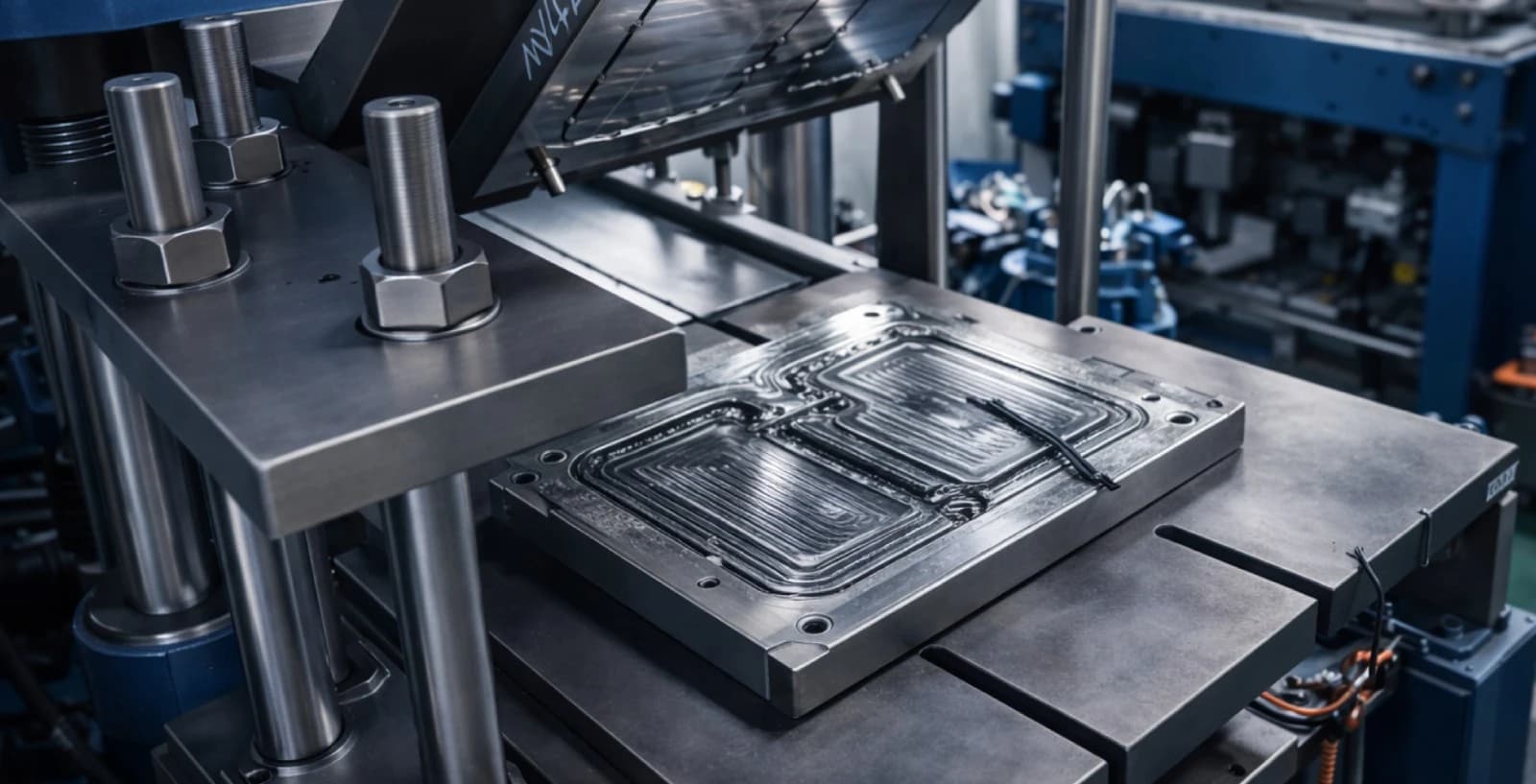
Compression molding shapes rubber and thermoset materials by pressing a pre-measured amount of material into a heated open mold. The mold closes under hydraulic pressure, forcing the material to fill the cavity. Heat and pressure cure the material into its final shape.
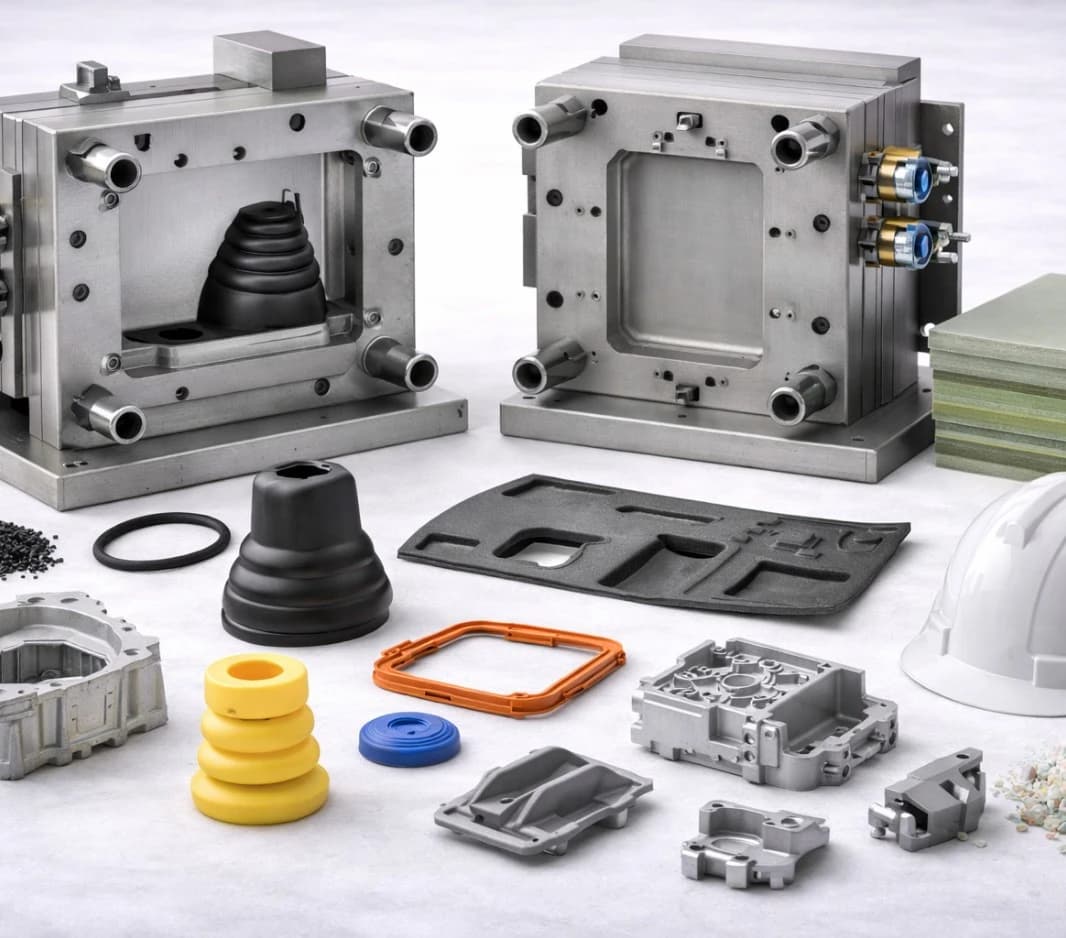
The process is suited to flat and moderately complex geometries. It works well with silicone, EPDM, nitrile, and other thermoset rubbers, as well as BMC and SMC thermoset composites.
What Sets Us Apart
Engineering-Led Manufacturing

Tooling lead time
2-3 weeks for standard mold designs.

Multi-cavity tooling
available to reduce per-piece cost at higher volumes.

In-house secondary operations
trimming, punching, bonding, and insert assembly.

ISO 9001:2015 certified
hardness, dimensional, and visual inspection on every batch.
Our Compression Moulding Capabilities
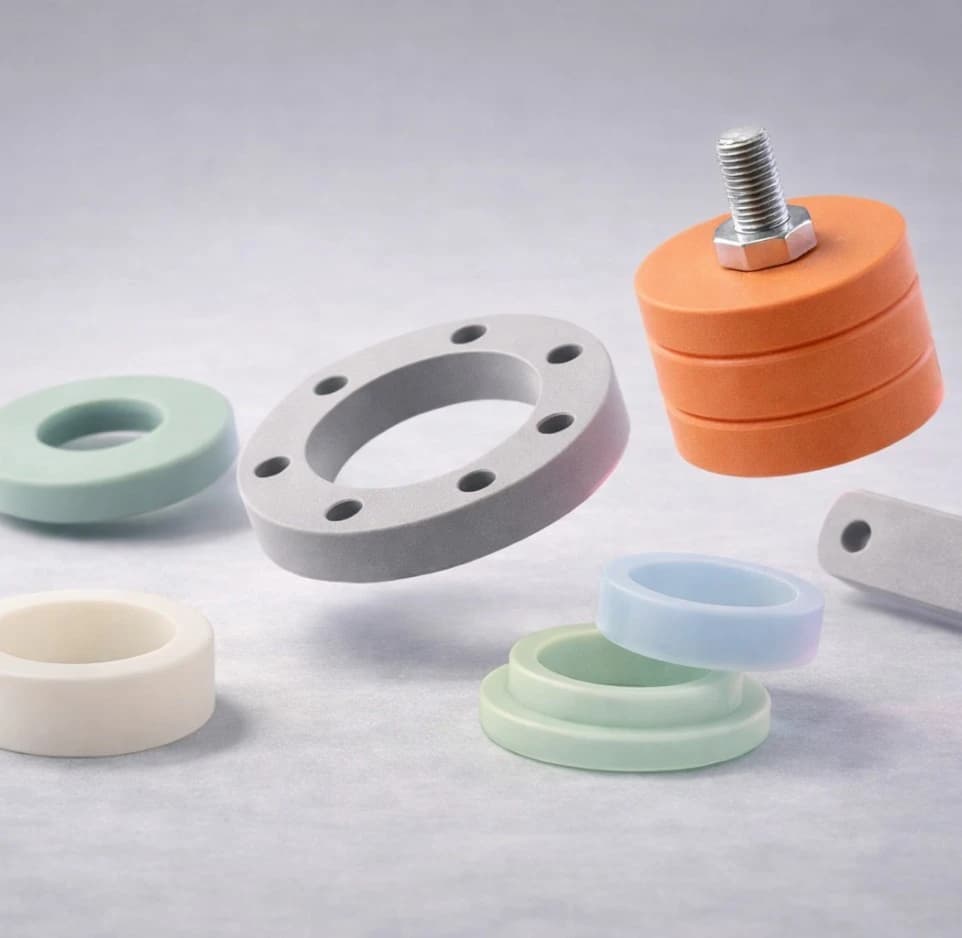
Rubber Compression Molding
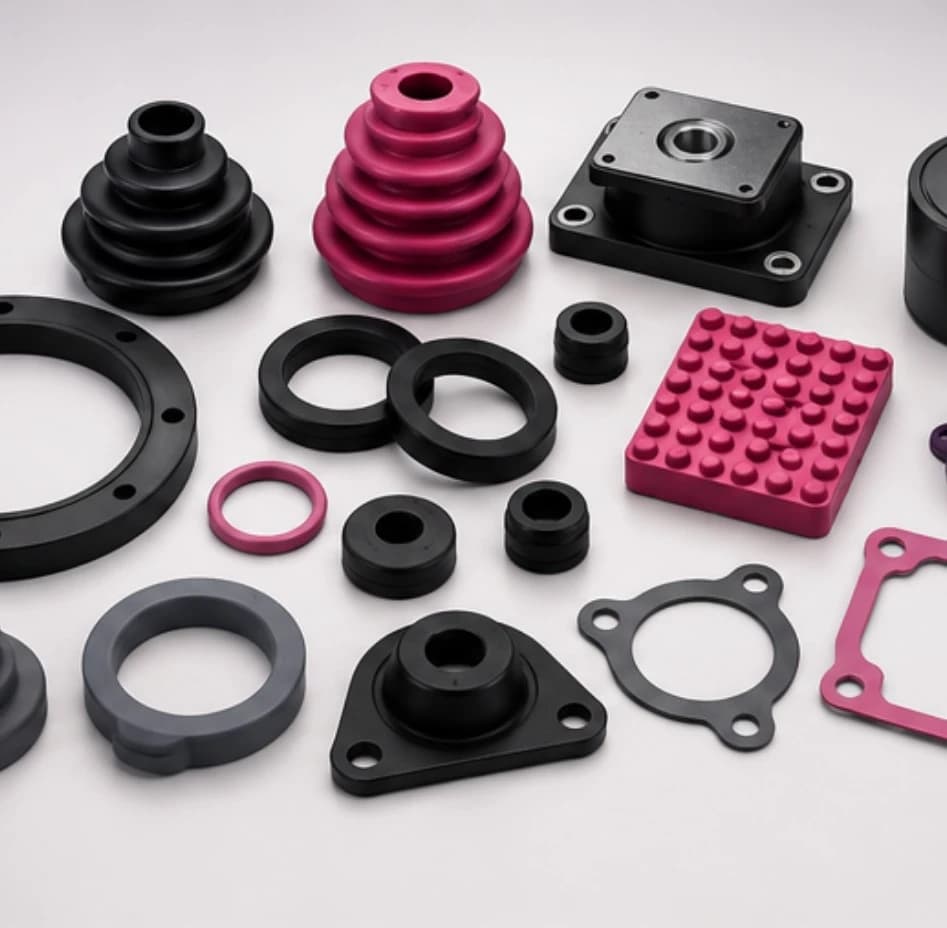
Pre-formed rubber blanks pressed in heated steel molds. Produces solid rubber parts with consistent shore hardness and dimensional repeatability. Suitable for seals, gaskets, grommets, bumpers, and vibration mounts.
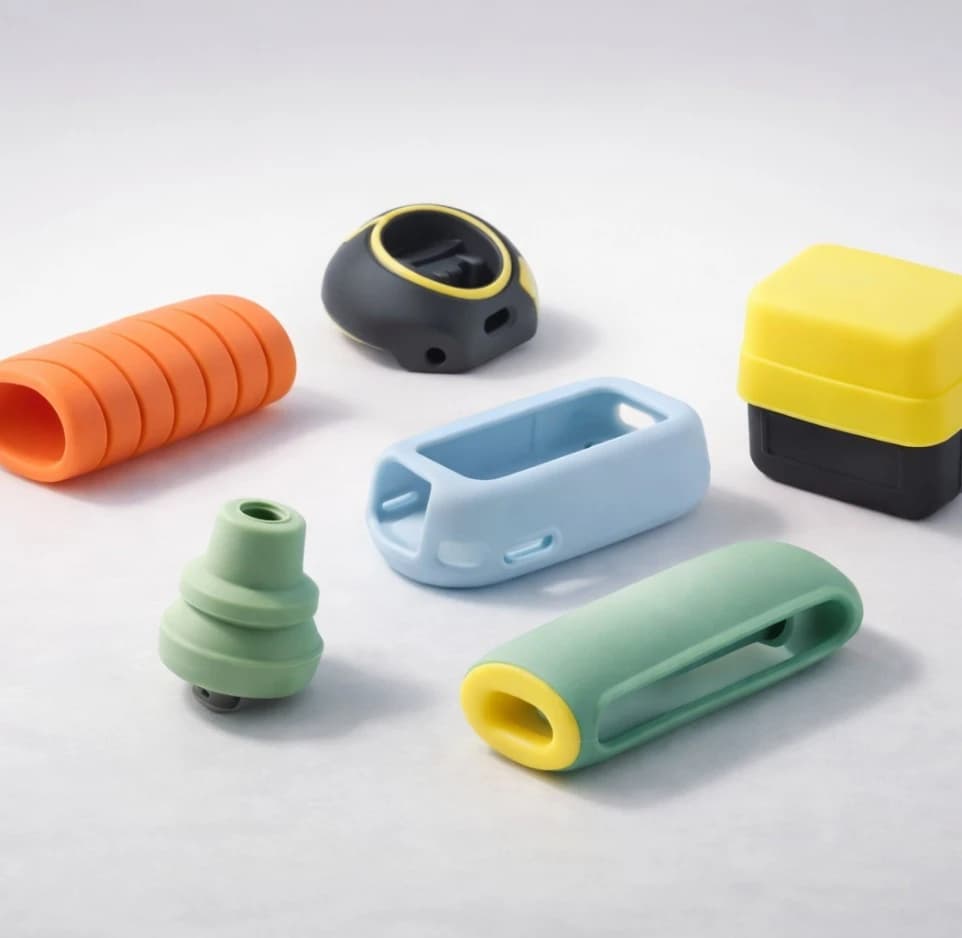
Silicone Compression Molding
High-consistency silicone (HCR) pressed in heated molds. Produces food-grade or medical-grade silicone parts with smooth surface finish. Suitable for O-rings, flat seals, keypads, infant products, and kitchen accessories.
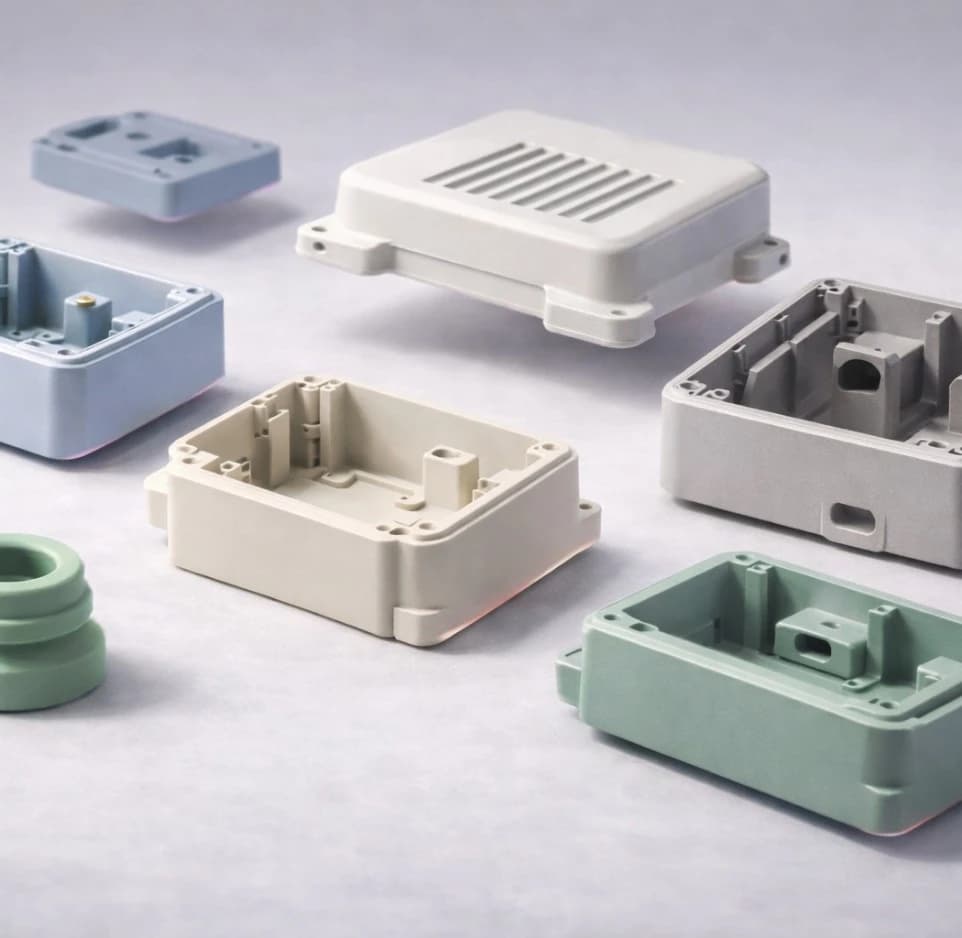
Thermoset Compression Molding: BMC and SMC
Bulk or sheet molding compound pressed under high heat and pressure. Produces rigid, glass-reinforced parts with good heat resistance. Suitable for electrical enclosures, switch components, and automotive panels.
Our Process
STEP 1
Mold Design
Steel compression mold designed for the part geometry and rubber flow pattern.
STEP 2
Material Preparation
Rubber or thermoset compound weighed and pre-formed into a blank sized to mold cavity volume.

STEP 3
Loading
Pre-form placed into the open, heated lower mold half.

STEP 4
Compression
Mold closes under hydraulic pressure; material flows to fill the cavity under heat and pressure.

STEP 5
Curing
Material cures under controlled time, temperature, and pressure parameters.

STEP 6
Demolding and Finishing
Part ejected; flash removed by trimming, tumbling, or cryogenic deflashing.

Materials
| Material | Key Properties | Suitable Applications |
|---|---|---|
| Silicone (HCR, Shore A 20-80) | Heat resistant to 200°C, food-grade options | Seals, infant products, kitchen accessories, O-rings |
| EPDM | Weather, ozone, and UV resistant | Automotive seals, outdoor gaskets, weatherstripping |
| NBR (Nitrile) | Oil and fuel resistant | Automotive O-rings, hydraulic seals, fuel system parts |
| Neoprene (CR) | Moderate oil resistance, good general properties | Marine seals, wetsuit components, hose covers |
| Viton (FKM) | High temperature, chemical resistance | Aerospace seals, chemical plant gaskets |
| Natural Rubber (NR) | High elasticity, good abrasion resistance | Vibration mounts, anti-slip pads, shock absorbers |
| BMC (Bulk Moulding Compound) | Rigid, glass-filled, heat resistant | Electrical housings, switch parts, structural components |
| SMC (Sheet Moulding Compound) | Good surface finish, glass-reinforced | Automotive body panels, electrical enclosures |
The Output
Typical tolerance: ±0.2-0.5mm (dependent on material and geometry)
Minimum wall thickness: 1mm recommended
Shore A hardness: 10-90 (material dependent)
Lead time: 2-3 weeks (tooling); 7-14 days per production run
Minimum order: 100 pieces
Secondary operations: trimming, bonding, punching, metal insert assembly
Industries We Serve
Scale Your Production with Confidence.
Share your volume requirements and design files. Our team confirms tooling lead time and unit cost.