
CNC Machining
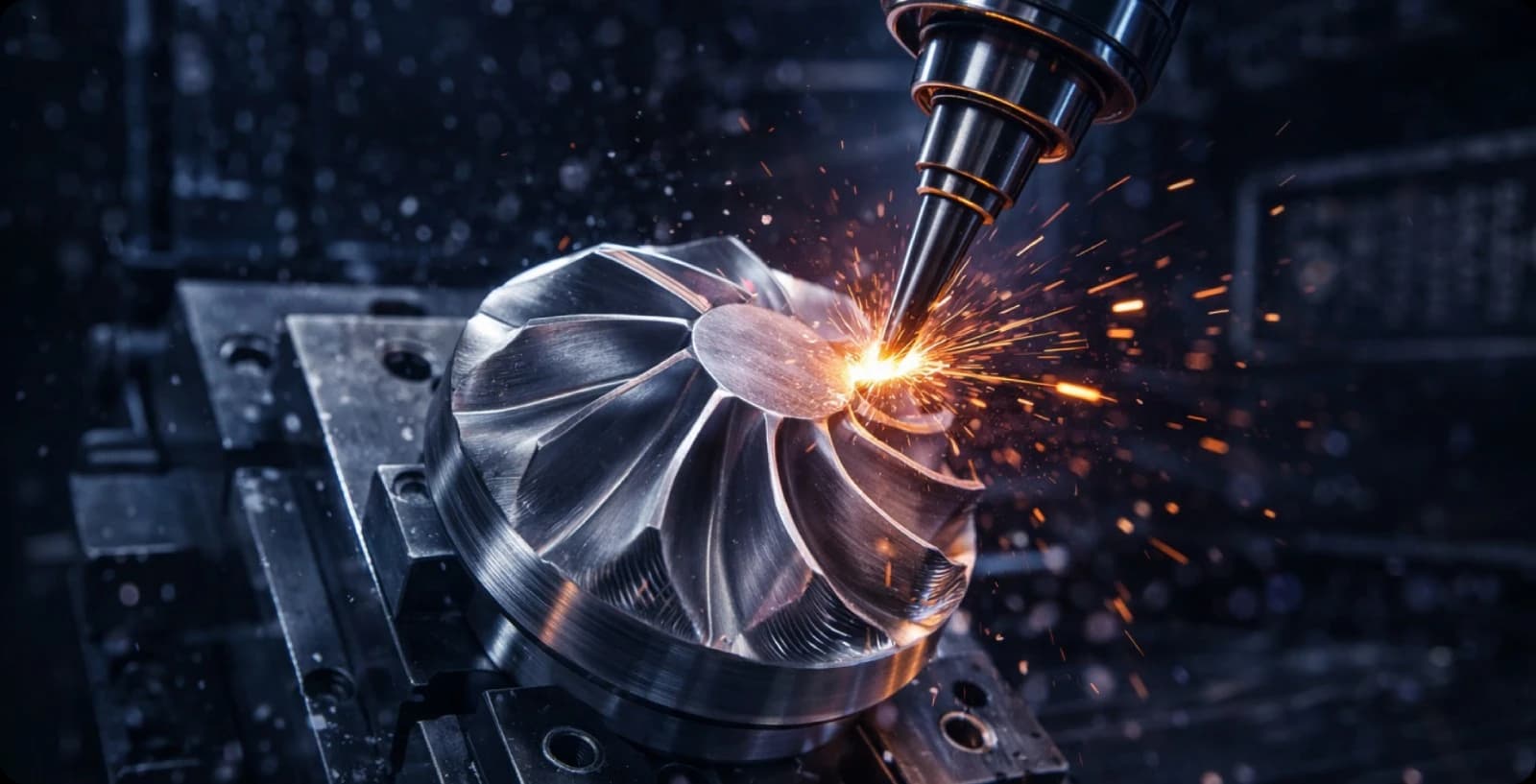
CNC (Computer Numerical Control) machining is a subtractive manufacturing process. Raw material (metal or plastic) is cut to shape using computer-controlled cutting tools that follow a digital design file. The process removes material progressively until the required geometry is achieved.
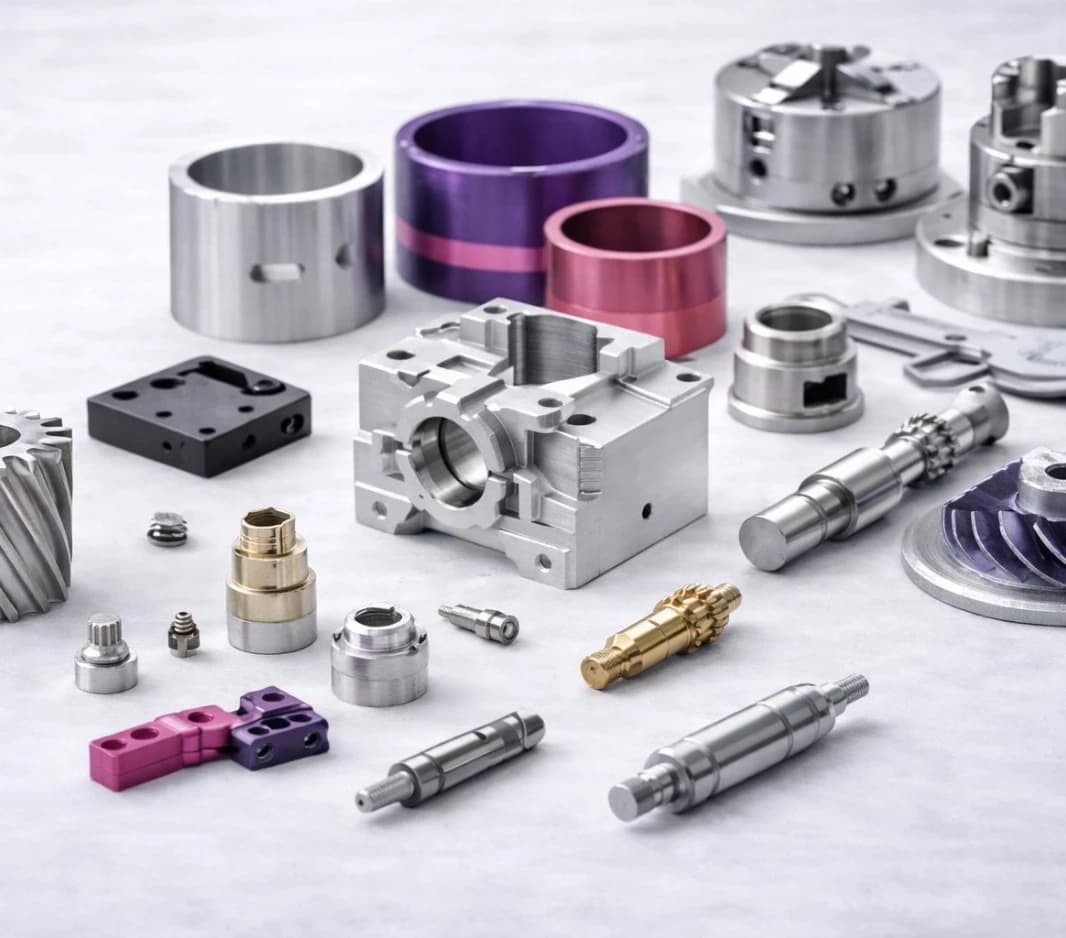
CNC machining supports tight tolerances, complex geometries, and a wide range of engineering materials. It is suitable for prototypes, functional parts, jigs, fixtures, and production runs where dimensional accuracy is critical.
What Sets Us Apart
Engineering-Led Manufacturing
Tolerances to ±0.01mm
in-house 3-, 4-, and 5-axis CNC milling and turning with full process control.

No subcontracting
all machining performed at our facility in Shenzhen.

ISO 9001:2015 certified
full inspection records available on request for every batch.

Single piece to production volumes
no minimum order quantity.
Our CNC Machining Capabilities
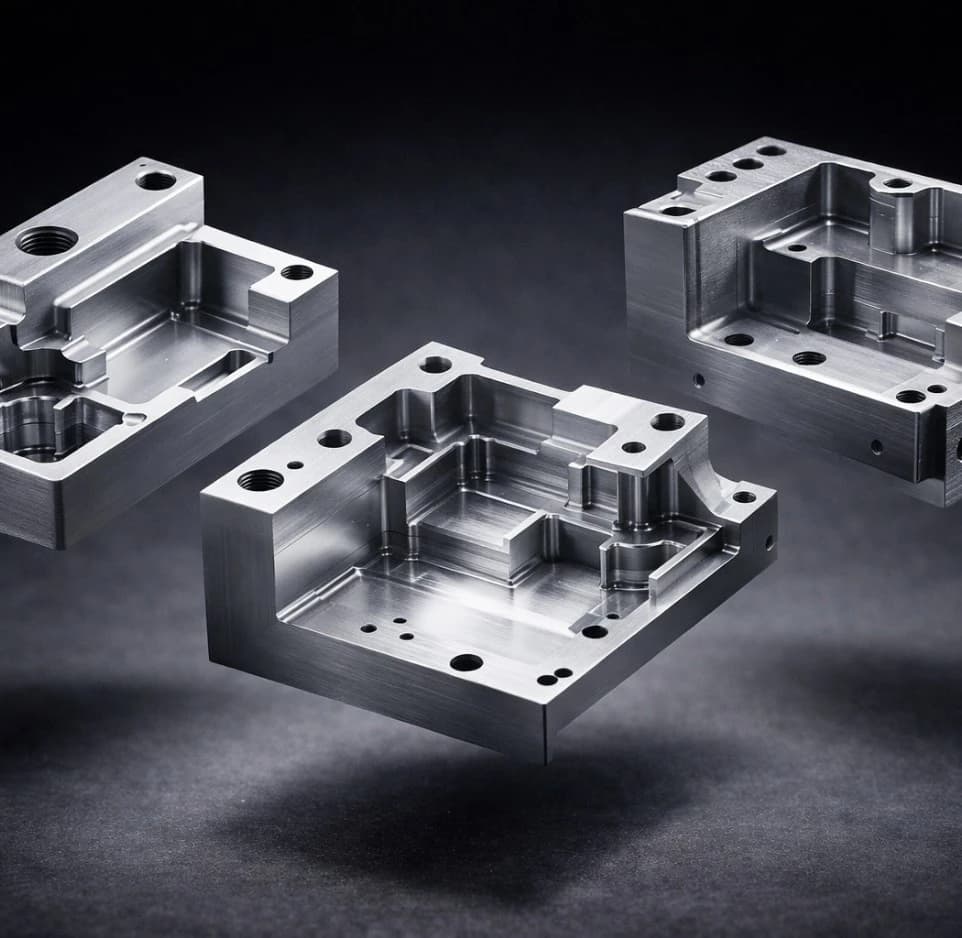
CNC Milling
Uses rotating multi-point cutting tools to remove material from a fixed workpiece. Available in 3-axis, 4-axis, and 5-axis configurations. Suitable for flat surfaces, pockets, contours, and complex 3D profiles.
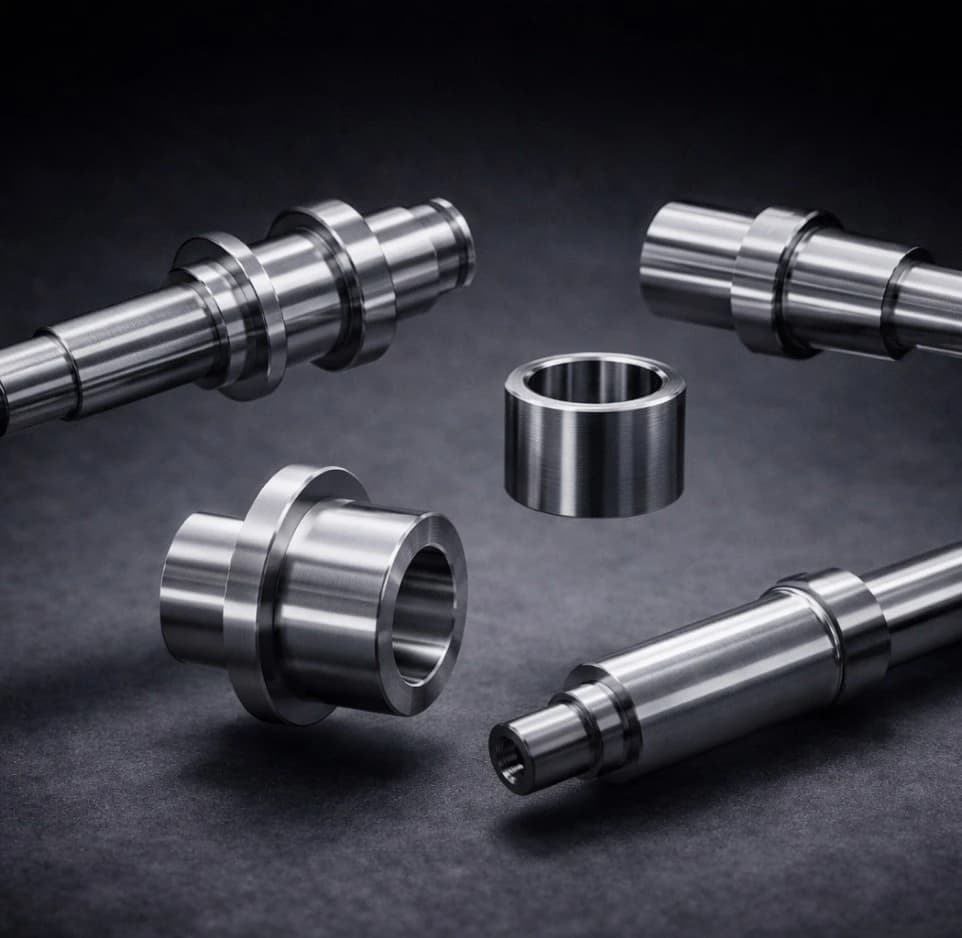
CNC Turning
Rotates the workpiece against a stationary cutting tool. Produces axially symmetric components with high concentricity. Suitable for shafts, bushings, pins, and rotational parts.
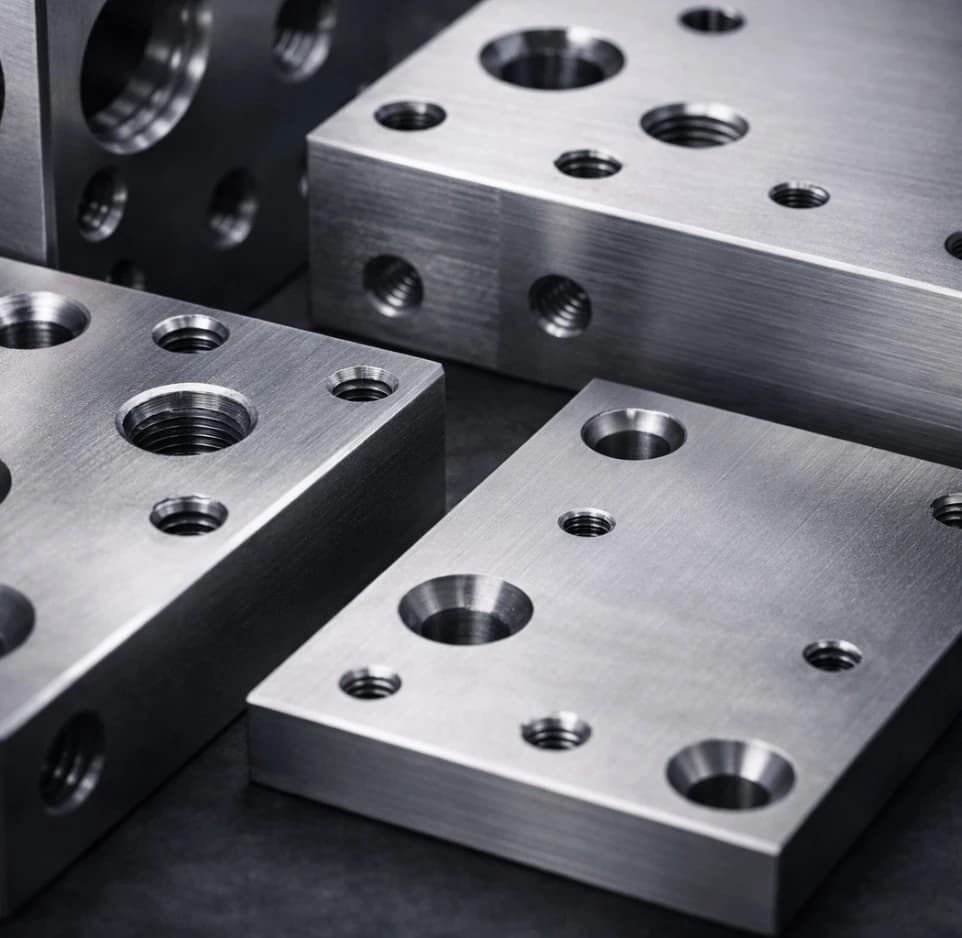
CNC Drilling
Creates precision holes to specified diameters and depths. Suitable for threaded inserts, bolt patterns, counterbores, and internal fluid channels.
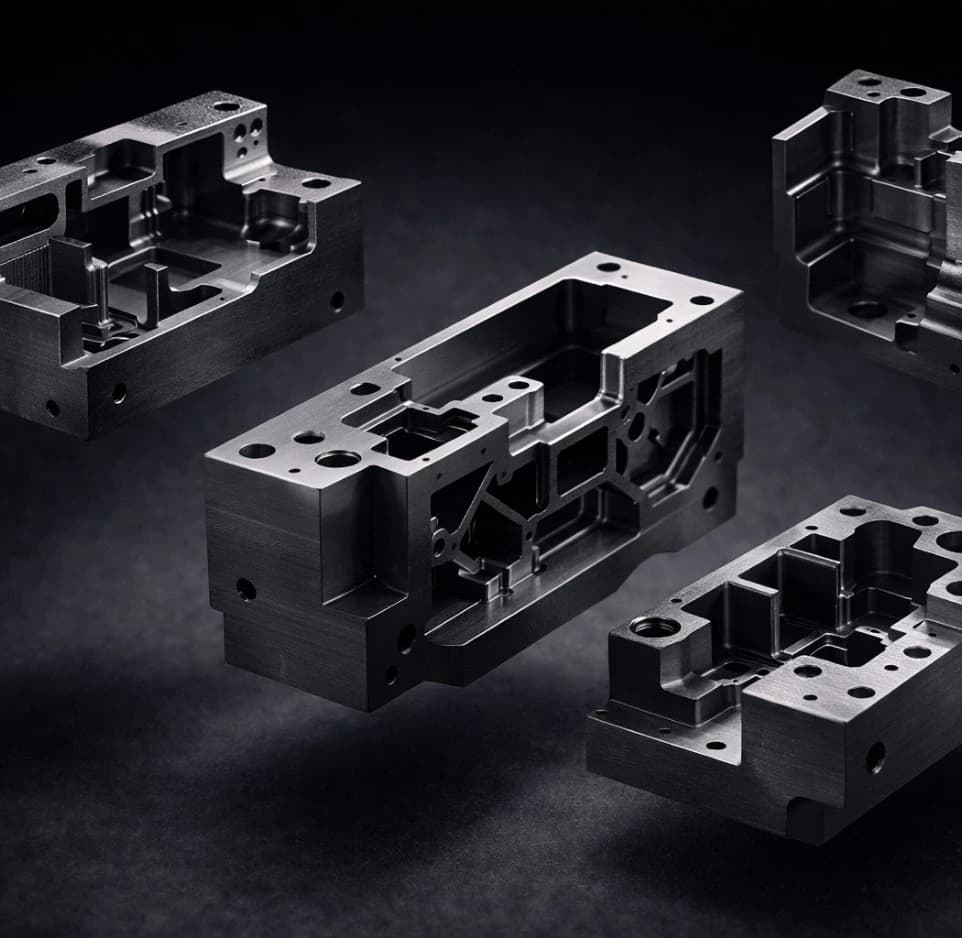
CNC EDM: Wire and Sinker
Uses controlled electrical discharge to erode material without mechanical cutting force. Suitable for hardened metals, complex internal cavities, and precision tooling inserts.
Our Process
STEP 1
File Upload
Submit your CAD file in STEP, IGES, DWG, or DXF format.

STEP 2
Engineering Review
Our team checks your design for machinability and confirms material, tolerance, and finish requirements.

STEP 3
Toolpath Programming
CNC programs are generated using CAM software based on your design file.

STEP 4
Machining
Parts are produced on CNC mills or lathes using the confirmed material.

STEP 5
Quality Inspection
Critical dimensions are verified using CMM equipment or manual gauging tools.

STEP 6
Finishing and Dispatch
Surface treatment applied if specified. Parts packed and shipped.

Materials
Plastics
| Material | Key Properties | Suitable Applications |
|---|---|---|
| ABS | Good impact resistance, easy to machine | Housings, brackets, jigs, functional prototypes |
| Nylon (PA6/PA66) | High strength, wear resistance | Gears, bushings, structural components |
| PEEK | High temperature resistance, chemical resistance | Medical instruments, aerospace, industrial parts |
| Acetal (POM) | Low friction, dimensional stability | Bearings, slides, precision mechanical parts |
| Polycarbonate | High impact strength, optical clarity | Covers, lenses, display components |
| PTFE | Non-stick surface, chemical inertness | Seals, gaskets, laboratory fittings |
| HDPE | Lightweight, chemical and moisture resistance | Tanks, fittings, food-contact parts |
| Acrylic (PMMA) | Optical clarity, surface hardness | Displays, light guides, protective covers |
Metals
| Material | Key Properties | Suitable Applications |
|---|---|---|
| Aluminium 6061 | Lightweight, corrosion resistant, excellent machinability | Structural parts, automotive, aerospace, electronics |
| Aluminium 7075 | High strength-to-weight ratio | Aerospace brackets, high-load structures |
| Stainless Steel 304 | Corrosion resistance, good strength | General industrial, food processing, marine |
| Stainless Steel 316 | Enhanced corrosion resistance, biocompatible | Medical devices, marine, pharmaceutical |
| Carbon Steel (1045) | High strength, low cost | Industrial tooling, structural components |
| Titanium Grade 5 (Ti-6Al-4V) | High strength-to-weight, biocompatible | Medical implants, aerospace, defence |
| Brass (C360) | Excellent machinability, corrosion resistant | Fittings, connectors, electronic components |
| Copper | High electrical and thermal conductivity | Electrical connectors, heat transfer parts |
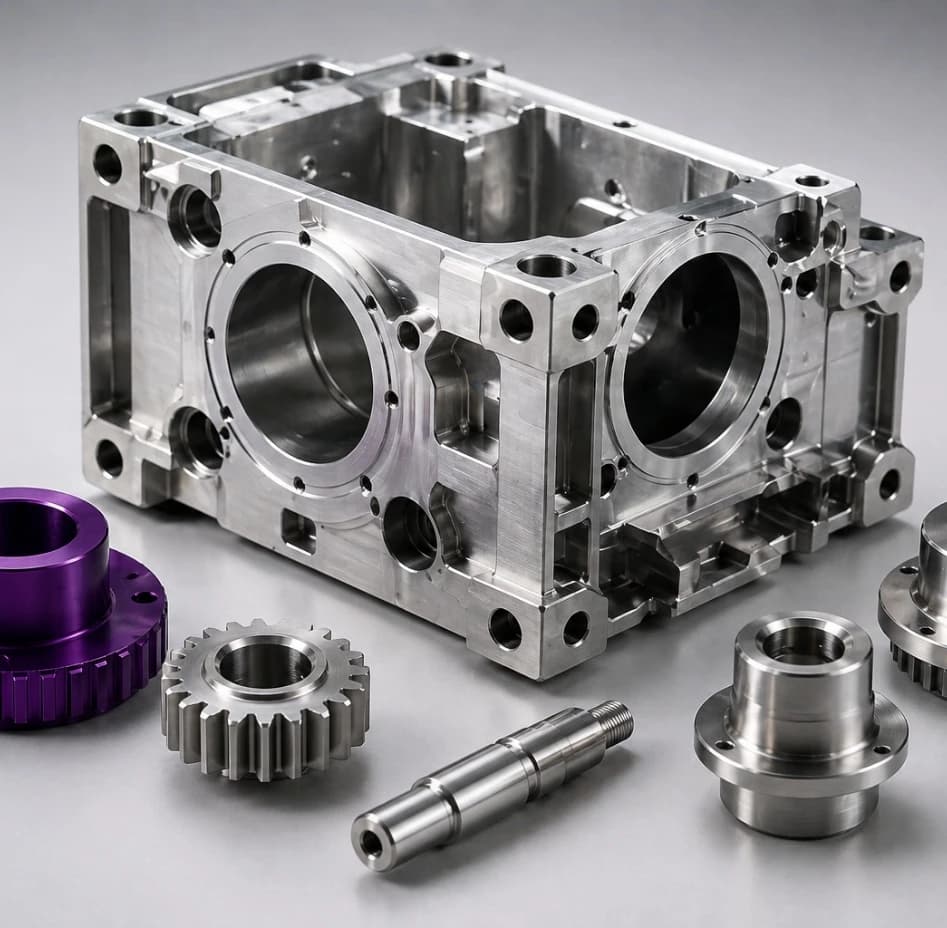
The Output
Standard tolerance: ±0.1mm | Precision tolerance: ±0.01mm
Surface roughness: Ra 0.8-3.2μm (as-machined); Ra 0.4μm with polishing
Maximum part size: 2,000 x 1,000 x 500mm (milling); Ø500mm x 1,000mm (turning)
Minimum wall thickness: 0.5mm (material dependent)
Standard lead time: 3-5 business days; complex geometry 7-10 days
Minimum order: 1 piece: no minimum
Available finishes: as-machined, anodising, electroplating, powder coating, bead blasting, polishing
Industries We Serve
Ready to Machine Your Part?
Upload your CAD files for a fast quote. Our engineers confirm lead times within 24 hours.