
Vacuum Casting: A Comprehensive Guide for Advanced Prototyping and Low-Volume Production
Vacuum casting is a rapid, cost-effective process that uses reusable silicone molds and thermoset resins to produce high-fidelity prototypes and low-volume functional parts from a master pattern.
Published 2026-01-14
Key findings
What's inside
- The Vacuum Casting Process: From Master Pattern to Final Part
- Master Pattern Fabrication & Preparation
- High-Performance Silicone Mold Making
- Vacuum-Assisted Resin Casting & Curing
- Why Vacuum Casting is Preferred in Prototyping and Beyond
- Superior Fidelity and Functional Performance
- Accelerated Development via Rapid Soft Tooling
- Unmatched Material and Application Versatility
- Cost-Effectiveness for Low Volumes
- Conclusion
Who it's for
- Product development teams validating designs
- Engineers needing functional prototypes
- Manufacturers requiring low-volume production parts
- Aerospace and medical sector professionals
About this resource
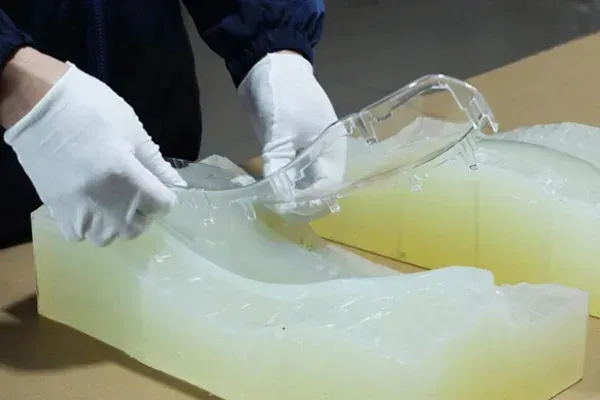
Vacuum casting is a rapid manufacturing process used to create high-fidelity prototypes and industrial-grade parts in low volumes. Using reusable silicone molds made from a master pattern and thermoset polyurethane resins, it produces near-injection-molding-quality copies with exceptional accuracy.
The Vacuum Casting Process
The workflow begins with a master pattern fabricated via CNC machining or 3D printing, which is sealed, primed, and finished to perfection. A platinum-cure silicone mold is then cast around the master, vacuum-degassed, and cured at 40–60°C for 6–16 hours. Finally, two-component polyurethane resin is vacuum-infused into the mold cavity and post-cured to achieve full mechanical properties.
Key Advantages
- Superior fidelity: Replicates surface textures to VDI 3400 standards and holds tolerances of ±0.1 mm per 100 mm.
- Rapid tooling: Silicone molds are ready in 1–3 days, enabling parallel design iterations.
- Material versatility: Resins can mimic final production plastics for functional, environmental, and ergonomic testing.
- Cost-effective low volumes: Ideal for 1–50+ units without the high NRE costs of hard steel tooling.
Widely used in aerospace, medical, and general product development, vacuum casting bridges the gap between digital design and mass production, helping teams validate designs and accelerate time-to-market.